
Snapshot
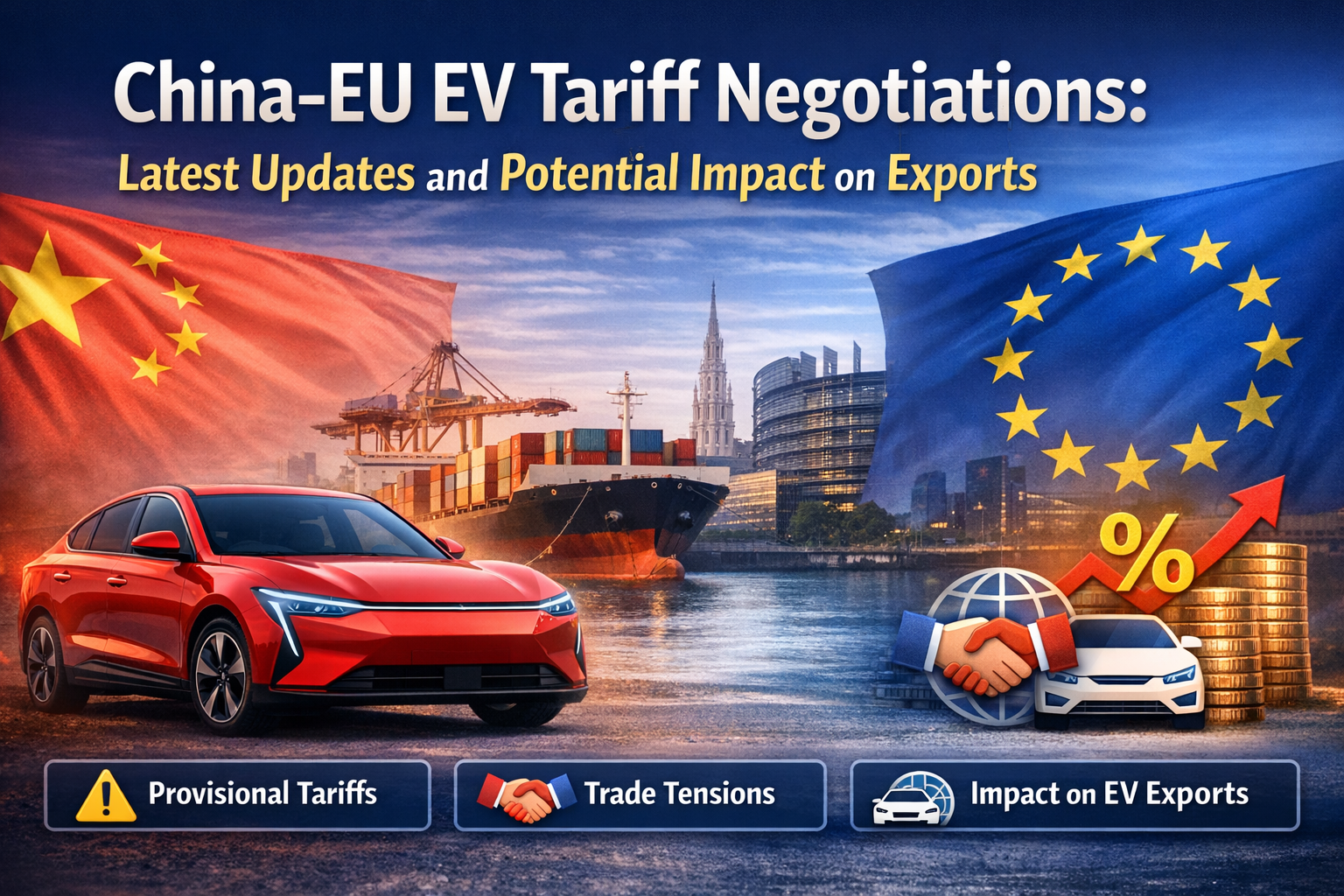
As of 2026, discussions between China and the European Union over electric vehicle (EV) tariffs are entering a decisive phase. What began as an anti-subsidy investigation by the European Commission has evolved into a broader negotiation that could reshape how Chinese EVs compete in Europe.
For exporters, distributors, and industry observers, the outcome will directly influence pricing, supply strategies, and long-term market positioning.
Where Things Stand Right Now
At the heart of the dispute is a familiar question: Are Chinese EVs benefiting from unfair state support?
The European Commission argues that subsidies have allowed Chinese manufacturers to undercut competitors in Europe. On the other side, China maintains that its cost advantage comes from:
- Highly integrated supply chains
- Rapid product iteration
- Strong battery manufacturing capabilities
This disagreement has triggered both political and technical negotiations, with neither side willing to back down easily.
Key Developments You Should Know
1. Provisional Tariffs Are Already on the Table
The EU has proposed additional duties on top of the existing 10% import tariff. Depending on the manufacturer, these provisional rates range roughly between:
- 17%+ for cooperative companies
- Up to nearly 40% for others
While these are not final, they set the tone for ongoing negotiations.
2. Diplomatic Talks Are Intensifying
Senior officials from both sides have been actively engaging in dialogue. China has pushed for a rollback of the proposed tariffs and has hinted at potential countermeasures targeting European exports if no compromise is reached.
This has raised the stakes beyond the auto sector, turning the issue into a broader trade discussion.
3. Technical Reviews Behind the Scenes
Alongside political messaging, technical teams are working through the details:
- How subsidies are defined
- How cost advantages are calculated
- What constitutes “fair competition”
These technical discussions will ultimately determine whether tariffs are adjusted, reduced, or enforced.
Possible Outcomes—and What They Mean
Scenario 1: Negotiated Compromise (Most Likely)
One realistic path forward is a price-based agreement.
Under this model:
- Chinese automakers may agree to minimum pricing thresholds
- Export volumes could be capped
In return, the EU could reduce or remove tariffs.
Impact:
- Market remains stable
- Growth continues, but at a controlled pace
Scenario 2: Full Tariff Implementation
If negotiations fail, provisional duties could become long-term measures.
Impact:
- Higher retail prices for Chinese EVs in Europe
- Slower market expansion
- Increased pressure on margins
Scenario 3: Escalation Into Broader Trade Conflict
A breakdown in talks could trigger retaliatory actions on both sides.
Impact:
- Uncertainty across multiple industries
- Disrupted supply chains
- Reduced investor confidence
How Different Chinese EV Brands Are Positioned
The impact won’t be equal across the board.
SAIC Motor (MG brand)
Facing some of the highest proposed tariff rates, SAIC is under immediate pressure.
Likely responses include:
- Adjusting pricing strategies
- Accelerating localization in Europe
Geely (Volvo, Polestar, Zeekr)
Geely is relatively better positioned due to:
- Lower provisional tariff exposure
- Existing European manufacturing footprint
This gives it more flexibility than most competitors.
BYD
BYD’s cost efficiency remains a major advantage.
Even with tariffs, it may still stay competitive, especially as it expands:
- Local production in Europe
- Regional supply chain integration
What This Means for Exporters and Dealers
If you’re involved in the China EV export business, this isn’t just policy news—it directly affects your operations.
Pricing Strategy Will Become More Complex
Margins may shrink unless:
- Costs are optimized
- Inventory is sourced more strategically
Local Presence Will Matter More
Brands and distributors may need to:
- Explore local assembly
- Build regional partnerships
Flexibility Will Be Key
The companies that adapt fastest—whether through pricing, logistics, or sourcing—will outperform others.
Frequently Asked Questions
Are the EU tariffs already finalized?
Not yet. Current measures are provisional. Final decisions depend on the outcome of ongoing negotiations.
Will EV prices in Europe increase?
Most likely, yes—especially if tariffs are fully implemented. However, the final price impact will depend on how costs are distributed across the supply chain.
Will Chinese EV exports to Europe stop?
Highly unlikely. Europe remains a critical market. Instead of exiting, manufacturers are more likely to adjust strategies.
Final Thoughts
This isn’t just a short-term policy issue—it’s a structural shift in global EV trade.
The balance between cost competitiveness and regulatory pressure will define the next phase of Chinese EV expansion in Europe.
For exporters and dealers, staying informed—and adapting quickly—will be essential.
Stay Updated
As a platform focused on China EV export insights, ChinaEVExports.com will continue tracking developments in real time.
Follow our updates to stay ahead of policy changes, pricing shifts, and emerging opportunities in the global EV trade.