
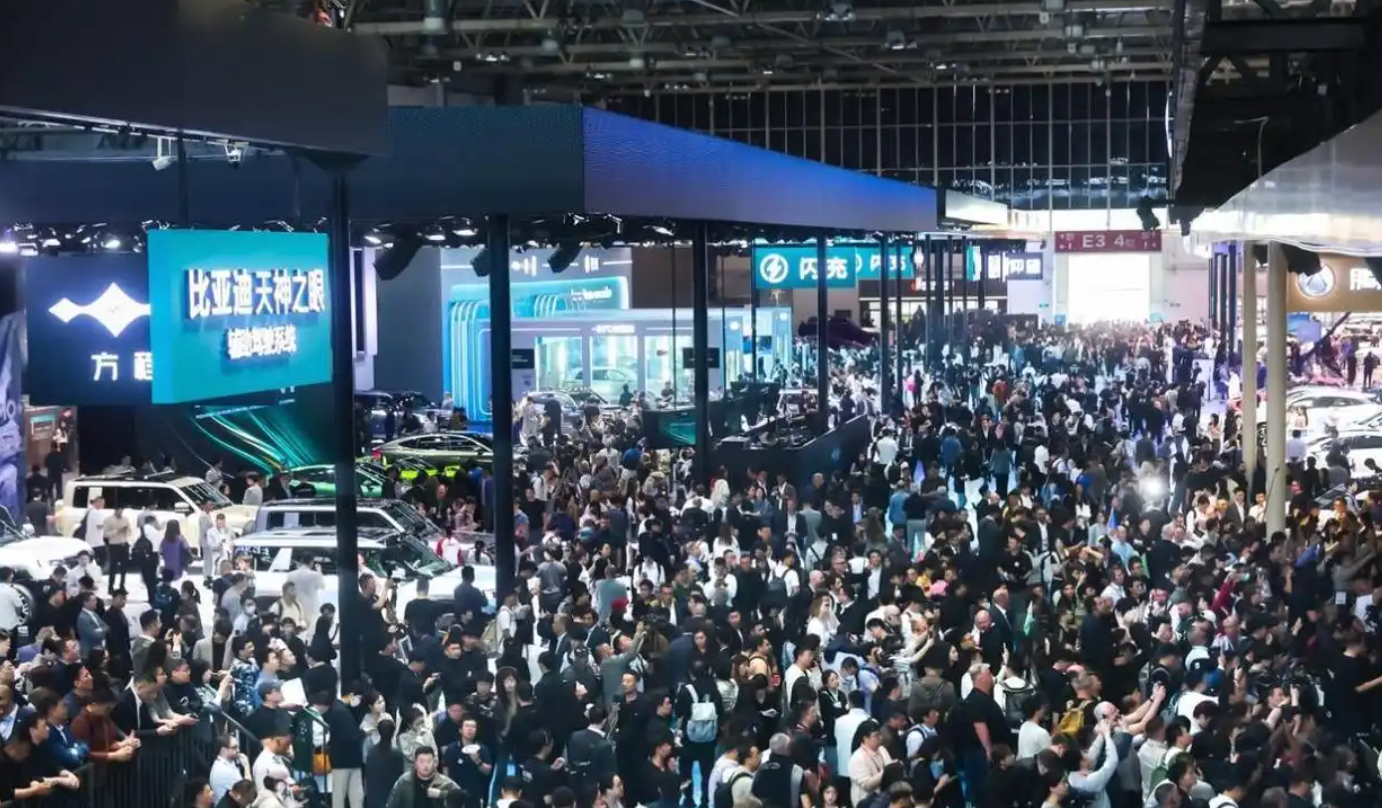
The 2026 Beijing Auto Show marked a major turning point for the global electric vehicle industry. More than just a showcase of new models, the event highlighted how Chinese automakers are rapidly becoming leaders in battery innovation, intelligent driving systems, and export-ready EV platforms.
For overseas importers, distributors, and fleet operators, the message was clear: China’s EV industry is no longer competing only on price. It is now competing on technology, software integration, and production speed.
Several important trends from this year’s exhibition are already shaping the future of global EV exports.
Solid-State Batteries Move Closer to Mainstream Adoption
One of the biggest highlights of the show was the rapid development of semi-solid-state and solid-state battery technology.
Brands including IM Motors and GAC Aion introduced new battery systems capable of delivering more than 1,000 kilometers of driving range under optimized conditions. Compared with traditional lithium battery platforms, these next-generation systems also improve charging efficiency, thermal safety, and cold-weather performance.
This is especially important for export markets such as Northern Europe and Canada, where low temperatures have traditionally reduced EV performance. The latest battery technologies presented in Beijing showed noticeable improvements in winter charging stability and long-distance reliability.
As battery innovation accelerates, Chinese EVs are becoming increasingly attractive in markets where range confidence remains a major factor for consumers and fleet buyers.
Autonomous Driving Technology Enters a New Stage
Another major trend at the 2026 show was the evolution of AI-powered autonomous driving systems.
Unlike earlier solutions that depended heavily on HD maps, several Chinese automakers demonstrated “mapless” intelligent driving platforms powered by end-to-end AI learning models. Companies such as Xiaomi EV, Huawei, and XPeng showcased advanced systems capable of adapting to unfamiliar urban environments with less localized infrastructure support.
This creates major opportunities for ride-hailing services, logistics companies, and commercial fleets in emerging international markets. Vehicles with scalable intelligent driving systems could significantly reduce operating costs while improving transportation efficiency.
However, regulatory compliance and software localization will remain critical challenges as autonomous driving standards continue to vary between countries.
Electric Pickups and Utility Vehicles Gain Global Attention
The 2026 Beijing Auto Show also showed that China’s EV expansion is moving beyond sedans and compact SUVs.
Electric pickups and off-road utility vehicles attracted strong international attention, especially after the global exposure of the BYD Shark. Manufacturers including Great Wall Motor introduced new electric truck platforms designed for commercial and industrial use.
Demand for these vehicles is rising rapidly in markets such as Latin America, Australia, Southeast Asia, and the Middle East. Fleet operators in construction, mining, and logistics industries are increasingly focused on lowering fuel costs and reducing long-term maintenance expenses.
High-torque electric utility vehicles are becoming a practical alternative to traditional combustion-engine trucks in many developing markets.
China’s EV Industry Is Becoming a Global Technology Ecosystem
One of the clearest conclusions from the 2026 Beijing Auto Show is that EV exporting is becoming far more technology-driven than before.
Today’s global EV market requires more than vehicle manufacturing. Battery certification, OTA software systems, intelligent driving compatibility, charging standards, and regional compliance have all become essential parts of international EV trade.
Chinese automakers are rapidly building advantages across these areas through vertical integration and faster product development cycles.
As global demand for intelligent electric mobility continues to grow, companies that adapt early to this next generation of EV technology will likely gain the strongest competitive advantages in the years ahead.