
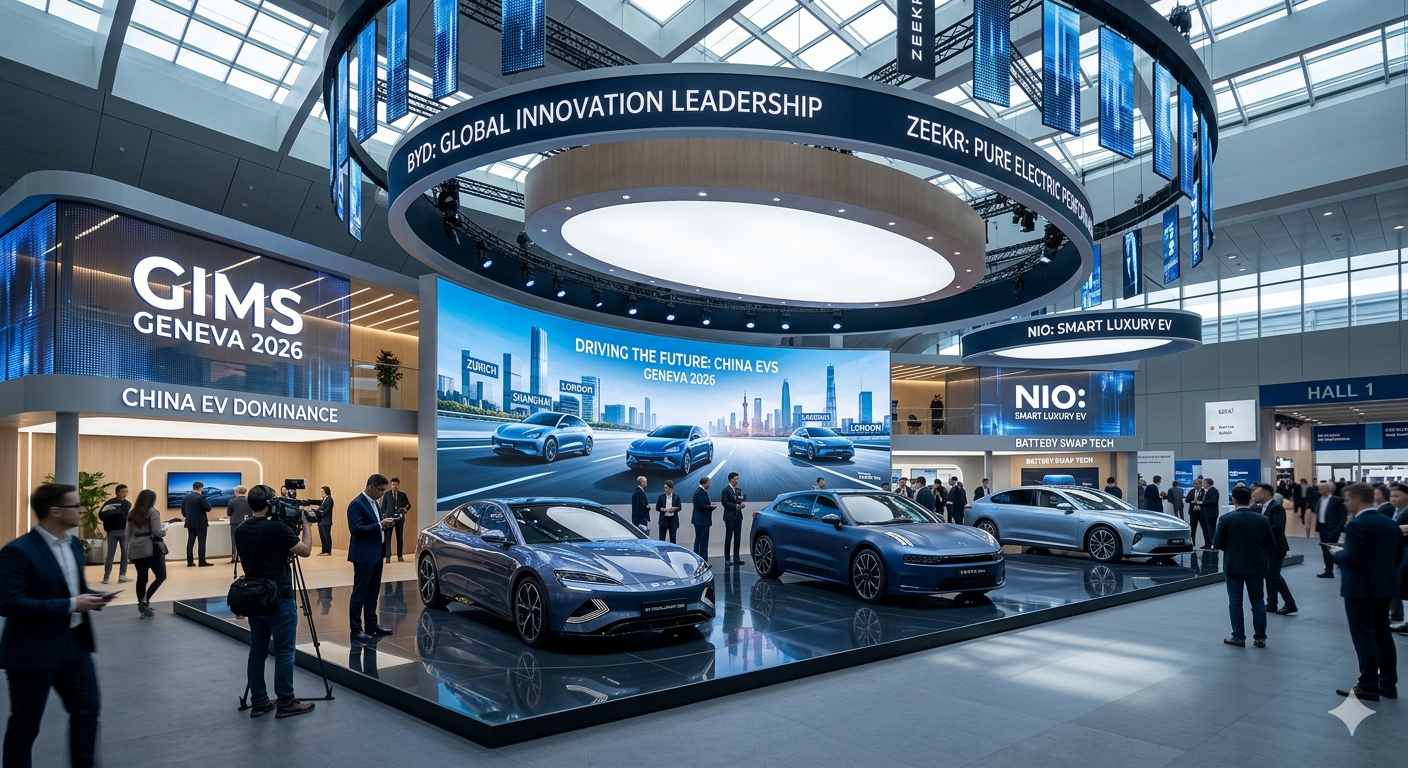
New Launches Signal Faster Global Expansion and Mature Export Strategies
GENEVA, Switzerland — 2026 — The Geneva International Motor Show has once again become a key battleground for global automakers. But this year, the spotlight has clearly shifted.
Chinese electric vehicle (EV) manufacturers are no longer viewed as challengers—they are now among the most influential players shaping the direction of the global auto industry.
From product launches to infrastructure strategy, brands such as BYD, MG (SAIC Motor), and NIO presented a coordinated push into international markets, particularly Europe.
BYD Strengthens Dual Strategy: Volume + Luxury
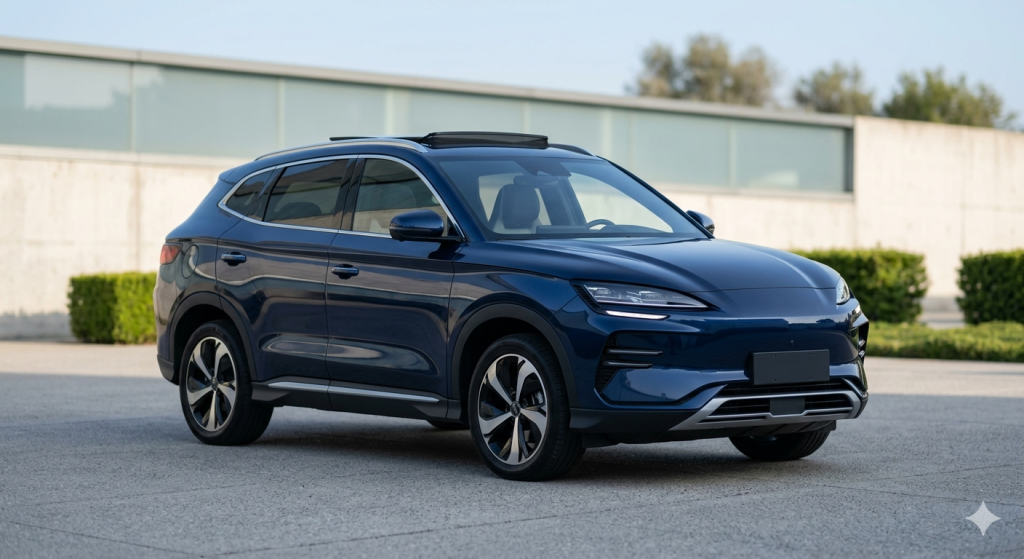
BYD continued its aggressive international expansion by reinforcing both ends of its product spectrum.
The Seal U, already gaining traction in multiple markets, was highlighted as a core model for Europe. Positioned in the mid-size SUV segment, it directly competes with established global bestsellers, combining competitive pricing with increasingly refined design and technology.
At the same time, BYD showcased its high-end sub-brand Yangwang, with the U8 luxury off-road SUV drawing significant attention. Equipped with a quad-motor system and advanced control technologies, the U8 serves as a statement of engineering capability rather than a volume-driven product.
Industry takeaway:
BYD is no longer relying on price advantage alone—it is building a full-spectrum brand strategy that includes premium and luxury positioning.
MG Expands Hybrid Strategy for Transitional Markets
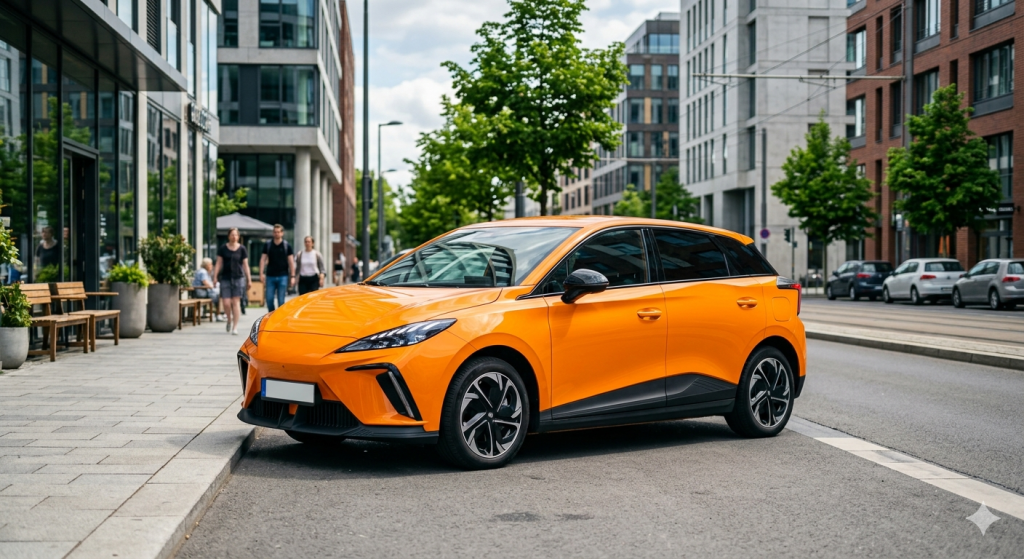
MG, under SAIC Motor, continues to play a different but equally strategic role.
The MG3 Hybrid+ remains a key model in its global lineup, especially in regions where full EV adoption is still limited by infrastructure.
Rather than pushing fully electric vehicles in all markets, MG is focusing on hybrid solutions to accelerate entry and acceptance.
Why this matters:
This “step-by-step electrification” approach allows MG to scale faster in emerging markets while building long-term customer familiarity with electrified vehicles.
NIO Pushes Infrastructure as a Competitive Advantage
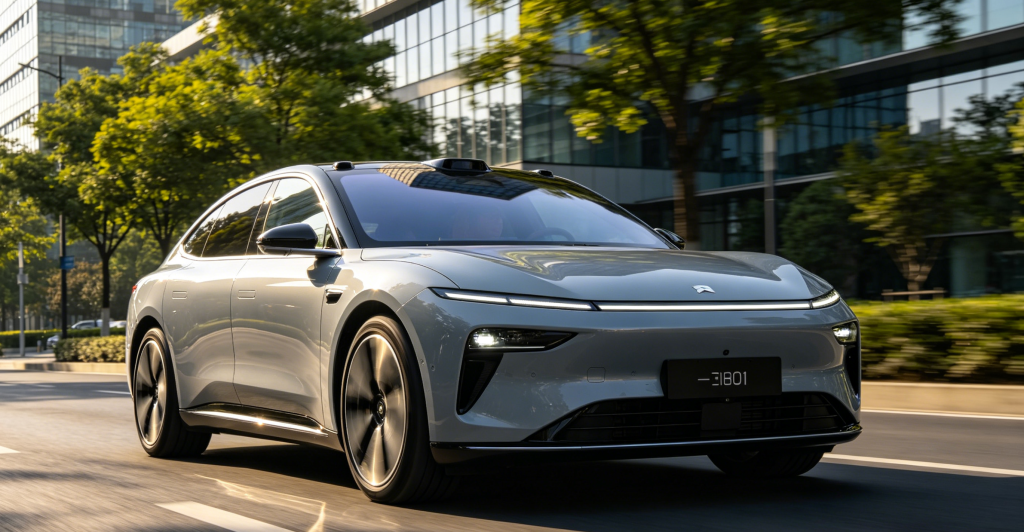
NIO’s presence at the show focused less on launching new vehicles and more on strengthening its ecosystem narrative.
Its latest generation battery swap stations and Battery-as-a-Service (BaaS) model were front and center, highlighting a fundamentally different approach to EV ownership.
The company continues expanding its swap network across Europe, aiming to solve two persistent barriers: upfront vehicle cost and battery degradation concerns.
Strategic insight:
NIO is not just selling cars—it is building a service-based infrastructure layer that differentiates it from traditional automakers.
Key Chinese EV Export Models (2026 Snapshot)
| Brand | Model | Segment | Target Markets | Key Strength |
|---|---|---|---|---|
| BYD | Seal U | Mid-size SUV | Europe, APAC | Cost-performance balance |
| MG (SAIC) | MG3 Hybrid+ | Compact Hatchback | Europe, SEA, LATAM | Hybrid accessibility |
| NIO | ET7 / BaaS | Premium Sedan | Europe | Service ecosystem |
| Yangwang (BYD) | U8 | Luxury SUV | Global | High-performance tech |
What This Means for Global Buyers
The developments at Geneva 2026 reinforce several important trends:
1. Chinese EVs have entered the “mainstream competition” phase
They are no longer niche alternatives but direct competitors to global brands.
2. Export strategies are becoming more structured
Companies are aligning product, pricing, and infrastructure for long-term international growth.
3. Technology differentiation is increasing
From battery systems to software and service models, competition is shifting beyond price.
Final Takeaway
The message from Geneva this year is clear.
Chinese EV manufacturers are not just expanding globally—they are doing so with clearer strategies, stronger products, and growing confidence.
For importers, distributors, and investors, this is no longer a trend to watch—it is a shift to act on.