
Executive Summary
For years, the global conversation around Chinese electric vehicles has centered on standout models—those breakout cars that seemed to carry entire brands on their shoulders. But Auto China 2026 makes one thing clear: that era is over.
What’s replacing it isn’t just better cars. It’s something far more difficult to compete with—a fully systematized, multi-brand EV ecosystem.
China’s leading automakers are no longer playing the “single product success” game. Instead, they are deploying coordinated, vertically integrated “super-groups” that operate across price segments, user profiles, and global markets simultaneously.
From “Hero Cars” to Industrial Systems
Earlier in the decade, models like the Zeekr 001 or Li Auto L9 redefined their categories. They were disruptive, high-impact, and highly visible. But they were also isolated successes—dependent on continuous momentum from a single product line.
That model is now structurally obsolete.
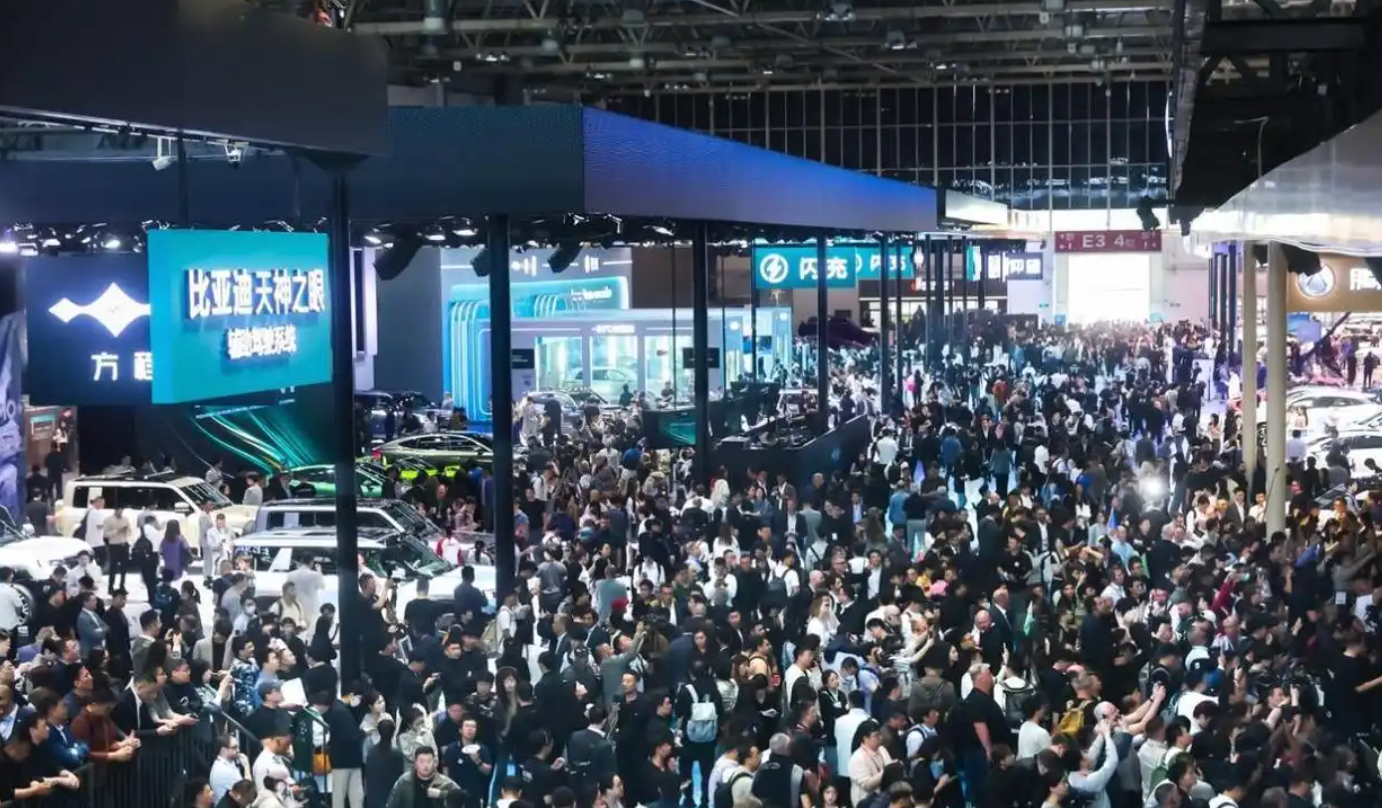
At Auto China 2026, the competitive battlefield has shifted from product vs. product to system vs. system. What we are seeing is the rise of what could be called ecosystem-level competition.
This means:
- Shared R&D platforms across brands
- Unified supply chains with massive scale advantages
- Clearly segmented brand architectures targeting every consumer tier
- Technology stacks deployed across entire portfolios, not single models
In short, competitors are no longer facing a car—they are facing an entire industrial framework.
Case Study 1: BYD’s Full-Spectrum Dominance
No company demonstrated this shift more clearly than BYD.
Rather than highlighting a single flagship, BYD used its presence to showcase a complete automotive hierarchy—a structured portfolio covering nearly every price point and use case.
At the core of this system:
- Mass Market Foundation
The Dynasty and Ocean series continue to anchor volume growth, pushing EV adoption into mainstream markets. - Premium Expansion
Denza targets high-income families and executive buyers with refined design and comfort. - Specialized Segments
FangChengBao addresses niche demand such as off-road and personalized mobility. - Ultra-Luxury Technology Showcase
YangWang pushes technological boundaries in the 1M+ RMB segment.
What ties all of this together is a shared technological backbone—battery systems, ADAS platforms, and charging infrastructure—all deployed at scale.
This is why BYD’s aggressive export ambitions (targeting over one million units annually) are credible: they are not dependent on a single product cycle, but on a deeply integrated ecosystem.
Case Study 2: Zeekr and Lynk & Co – Precision Integration
If BYD represents scale, then Zeekr represents focused integration.
Following its strategic consolidation with Lynk & Co, the group has shifted toward a clear dual-brand positioning:
- Zeekr = High-end technology flagship
- Lynk & Co = broader, volume-oriented premium market
This division allows both brands to share R&D resources while maintaining distinct identities—a balance that many legacy automakers struggle to achieve.
At Auto China 2026, this strategy materialized through a strong product lineup:
- Upgraded Zeekr 009, repositioned toward family luxury
- New flagship SUVs (8X / 9X), equipped with advanced high-voltage architectures and in-house driver assistance systems
The key takeaway here isn’t just product strength—it’s operational efficiency.
By consolidating engineering and platform development, the group reduces redundancy while accelerating innovation cycles.
Why Ecosystems Are a Structural Advantage
This shift toward “EV super-groups” creates several competitive advantages that are difficult for global rivals to replicate quickly:
1. Scalable Innovation
Technologies like advanced battery systems or high-voltage platforms are no longer limited to flagship models. They are distributed across entire lineups, dramatically lowering cost per unit.
2. Market Resilience
A diversified portfolio allows brands to balance fluctuations across segments. Weak demand in premium categories can be offset by mass-market volume—and vice versa.
3. Stronger Global Partnerships
For international distributors and importers, working with a multi-brand ecosystem reduces risk. It signals long-term stability rather than reliance on a single trending product.
4. Faster Global Expansion
With multiple brands targeting different regions and demographics, Chinese automakers can adapt more efficiently to local market conditions.
The Strategic Implication for Global Markets
What Auto China 2026 ultimately reveals is not just a product trend, but a structural shift in how the automotive industry competes.
The “hero car” strategy—once effective for both startups and legacy brands—is no longer sufficient.
Instead, the new baseline is:
- Multi-brand coordination
- Platform-level innovation
- End-to-end industrial integration
This is why Chinese EV manufacturers are increasingly difficult to benchmark using traditional automotive metrics. They are not just car companies anymore—they are ecosystem operators.
Final Thought
The global EV race is entering a new phase.
It’s no longer about who builds the best single vehicle.
It’s about who controls the most efficient, scalable, and adaptable system.
And right now, Chinese automakers are setting that standard.