
Executive Summary
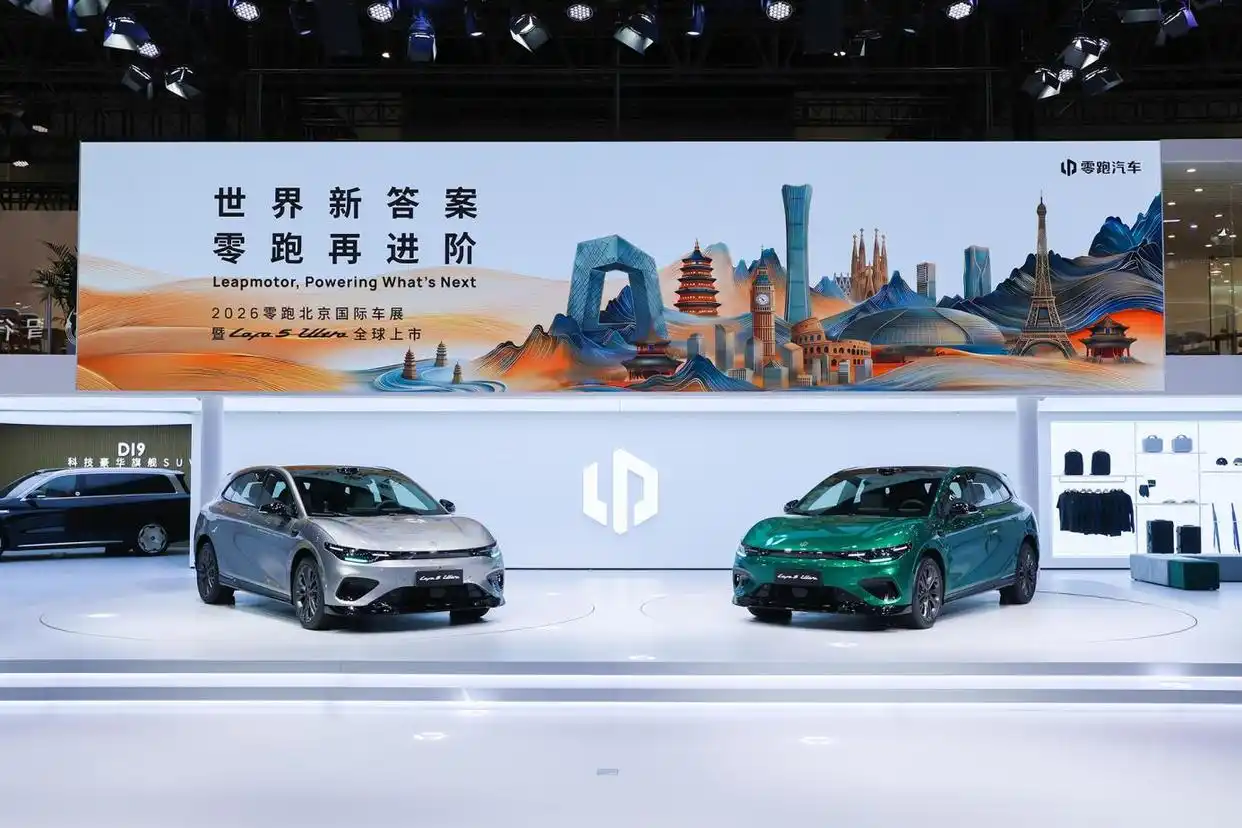
By 2026, the competitive dynamic in China’s EV market has shifted in a subtle but decisive way. The question is no longer whether domestic startups can challenge Tesla—it’s how they are doing it without ever confronting Tesla head-on.
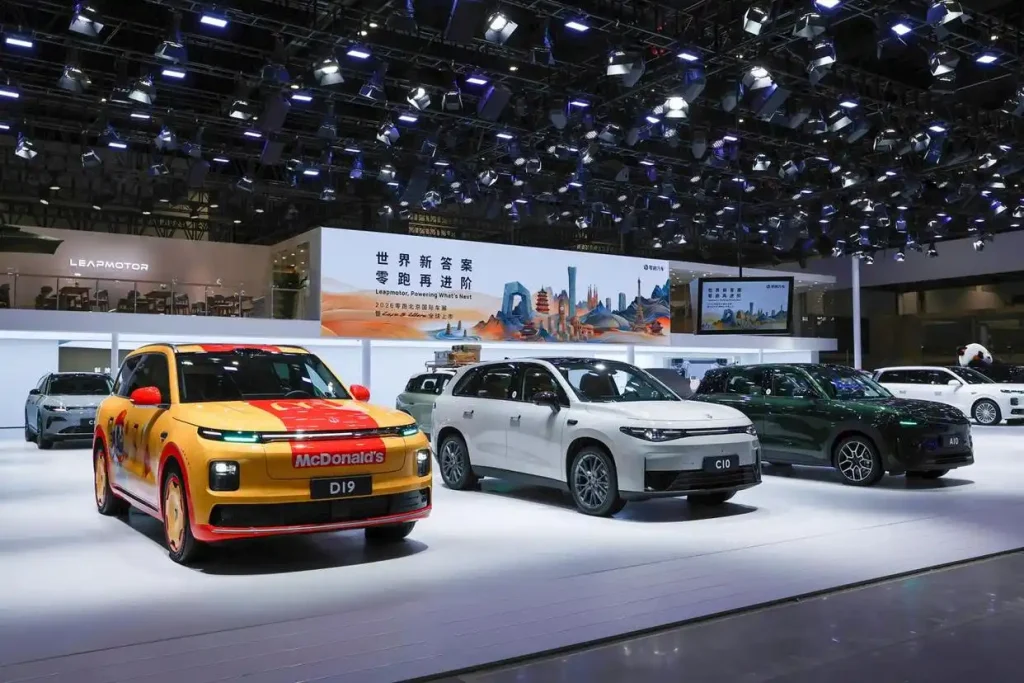
Rather than competing in the same premium space, Leapmotor has executed a disciplined “flanking strategy,” targeting the most underprotected segment of the market: high-volume, price-sensitive consumers seeking advanced technology at accessible price points.
Backed by its strategic alliance with Stellantis, Leapmotor has transformed from a cost-constrained startup into a scalable, globally connected EV player—effectively limiting Tesla’s ability to move downmarket in China.
The End of the “Tesla Killer” Narrative
For years, industry observers searched for a direct rival to Tesla—a single model that could outperform the Tesla Model 3 or Tesla Model Y in performance, branding, and technology.
That framing now looks outdated.
At Auto China 2026, the evidence suggests Tesla is not losing ground because of a superior competing product. Instead, its expansion is being constrained by a broader structural force: competitors are redefining the rules of engagement.
Rather than attacking Tesla’s strengths, companies like Leapmotor are exploiting its blind spots.
The 150,000–250,000 RMB Battlefield
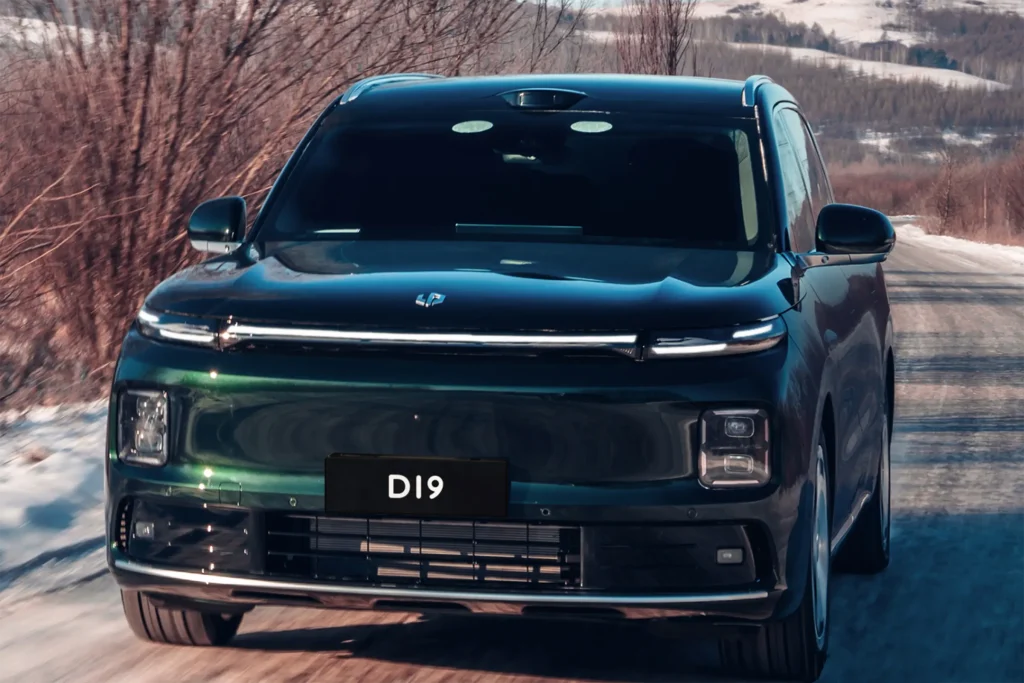
Tesla’s positioning in China remains firmly premium. Its pricing strategy, typically above 250,000 RMB, reinforces brand perception but also creates a natural boundary.
Below that threshold lies one of the largest and fastest-growing EV segments in the world.
Leapmotor has focused almost exclusively on this space.
Through its C-series lineup, the company has built a portfolio of sedans and SUVs that deliver a carefully calibrated value proposition:
- Strong range and performance metrics
- Competitive driver-assistance capabilities
- Smart cockpit systems tailored for local users
Instead of attempting to match Tesla feature-for-feature, Leapmotor delivers what many consumers perceive as “sufficiently advanced technology” at a significantly lower cost.
For a large portion of buyers, especially in China’s highly pragmatic consumer base, this trade-off is compelling.
Stellantis: The Partnership That Changed Everything
Leapmotor’s trajectory cannot be understood without its partnership with Stellantis.
What began as a strategic investment has evolved into a deeply integrated operational framework, often referred to as Leapmotor International. This structure fundamentally alters the company’s capabilities in three key areas:
1. Procurement Power
As a standalone startup, sourcing advanced components—such as LiDAR systems, high-voltage architectures, or next-gen semiconductors—would have been cost-prohibitive.
Through Stellantis, Leapmotor gains access to global-scale purchasing networks, significantly reducing per-unit costs and enabling broader feature deployment across its lineup.
2. Manufacturing and Scale
The partnership enables faster scaling beyond domestic production constraints. It also improves manufacturing consistency, a critical factor in competing with established global brands.
3. Global Market Access
Perhaps most importantly, the Stellantis network provides Leapmotor with immediate credibility in overseas markets. Distribution, after-sales service, and regulatory alignment—traditionally major hurdles for Chinese startups—are now significantly streamlined.
This is not just a financial partnership; it’s a structural upgrade.
Redefining “Tech Competitiveness”
Tesla still maintains a strong lead in certain areas, particularly in advanced autonomous driving development and proprietary software ecosystems.
However, Leapmotor has taken a different approach—focusing on user-perceived value rather than absolute technological leadership.
In practical terms:
- Advanced driver-assistance systems now cover the majority of real-world use cases (urban traffic, highway driving, automated parking)
- Hardware stacks incorporating LiDAR and high-performance chips are becoming standard in mid-range models
- Smart cockpit experiences are deeply localized, integrating seamlessly with China’s digital ecosystem
For everyday users, the functional gap between a Leapmotor vehicle and a Tesla has narrowed significantly—especially in typical driving environments.
This is not about surpassing Tesla’s technology.
It’s about making high-level functionality widely accessible.
Why Flanking Works
Leapmotor’s strategy highlights a broader shift in how competition is unfolding in China’s EV market.
Instead of direct confrontation, success is increasingly driven by three factors:
Price Positioning
Targeting high-volume segments that premium brands cannot easily enter without diluting their identity.
Strategic Partnerships
Using alliances to overcome structural disadvantages in scale, supply chain, and global reach.
Selective Innovation
Prioritizing the features that matter most to consumers, rather than chasing leadership in every technological domain.
This combination creates a powerful competitive model—one that doesn’t require defeating Tesla directly to limit its growth.
The Bigger Picture
Leapmotor is not displacing Tesla in the premium segment. That was never the goal.
What it is doing, however, is reshaping the competitive landscape beneath Tesla—effectively closing off the most accessible path for Tesla to expand its market share in China.
As the EV market continues to mature, this kind of indirect competition may prove more impactful than any head-to-head rivalry.
Final Thought
The evolution of China’s EV industry is no longer defined by breakthrough products alone. It is increasingly shaped by strategy, positioning, and ecosystem design.
Leapmotor’s rise illustrates a key lesson for global automakers:
you don’t always need to challenge the leader where they are strongest.
Sometimes, the smarter move is to grow where they cannot follow.