
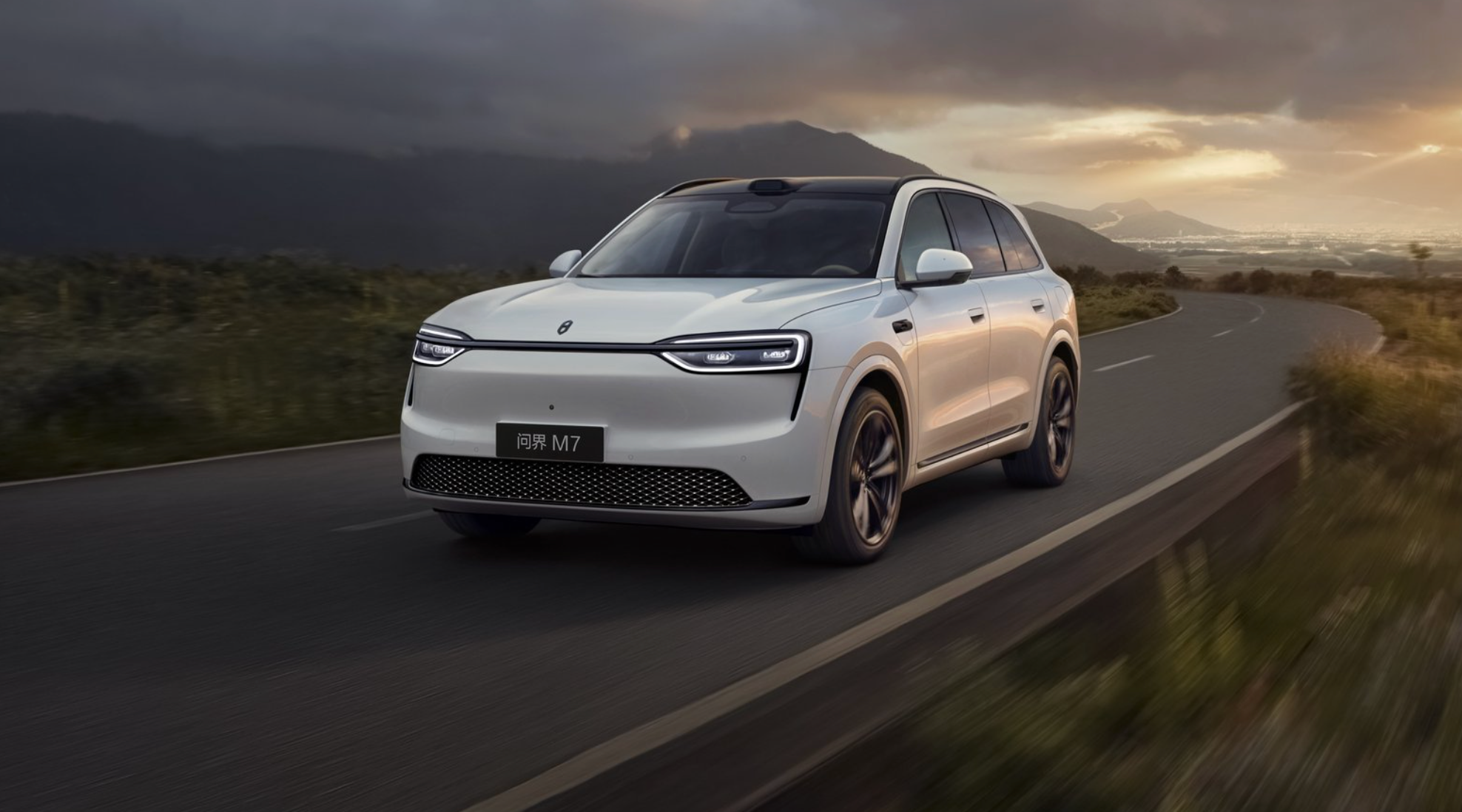
For most of the past three years, the global discussion around Chinese EV exports has revolved around one topic: volume.
How many vehicles are leaving Chinese ports?
How quickly are brands like BYD, Geely, Chery, and SAIC expanding overseas?
Which countries are imposing tariffs next?
But by May 2026, that conversation is changing.
The real story is no longer about how many cars China exports. It is about how Chinese automakers are rebuilding entire overseas operating ecosystems around logistics, compliance, software localization, and regional assembly capacity.
Even under tightening trade restrictions from Europe and North America, China’s new energy vehicle (NEV) exports continue to grow at a surprisingly resilient pace. Early customs channel data and port activity indicators suggest May 2026 exports could still post nearly 28% year-on-year growth.
That growth is no longer driven by simple “factory-to-port” shipping models. Instead, Chinese OEMs are adapting through localized infrastructure strategies that look far more mature than they did even 18 months ago.
Mediterranean Ports Are Becoming Strategic EV Redistribution Hubs
One of the clearest shifts this month is happening around Mediterranean logistics routes.
Vehicle handling activity has accelerated significantly across several southern European gateways, particularly in Greece, Spain, and Turkey. These ports are increasingly functioning as secondary processing and redistribution centers rather than final delivery destinations.
In many cases, vehicles arriving from China now undergo:
- software localization updates,
- telecom compatibility adjustments,
- regional homologation modifications,
- and final compliance inspections
before entering broader European or adjacent non-EU markets.
This is especially important as OEMs try to reduce exposure to direct tariff pressure while keeping delivery cycles stable.
At the same time, Southeast Asia continues to emerge as another major export pivot point. Thailand’s Laem Chabang Port has reportedly processed record volumes of right-hand-drive Chinese EV shipments during May, reflecting growing demand from ASEAN, Australia, and selected African markets.
The supply chain logic is becoming increasingly regionalized.
Chinese OEMs Are Quietly Solving the RoRo Bottleneck
Back in 2023 and early 2024, one of the biggest export constraints was the severe shortage of Roll-on/Roll-off (RoRo) vehicle carriers.
That situation is now improving.
A large number of LNG dual-fuel car carriers ordered during the shipping crisis have entered service over the past two quarters. Several major Chinese automakers—including BYD and SAIC—are also accelerating deployment of self-operated shipping fleets.
This matters more than many overseas buyers realize.
Freight costs remain one of the few variables capable of offsetting already-thin overseas margins. Industry shipping estimates suggest average ocean transport costs per exported vehicle have fallen roughly 15% compared with early 2025 levels.
That reduction helps manufacturers partially absorb new tariff pressure without immediately raising retail pricing overseas.
Why LFP Batteries Continue to Dominate Export Markets
Despite the attention surrounding solid-state battery announcements at Auto China 2026, export data still shows that the overwhelming majority of Chinese EV exports rely on advanced LFP battery platforms.
There are practical reasons for this.
For international markets, especially Europe and Latin America, procurement decisions are increasingly tied to:
- ESG traceability,
- mineral sourcing transparency,
- long-term durability,
- and cost predictability.
LFP chemistry fits those requirements better than many premium high-nickel alternatives.
By May 2026, industry estimates indicate that LFP and high-manganese battery systems account for roughly three-quarters of total Chinese EV export battery installations.
Solid-state batteries remain important strategically, but commercially they are still concentrated in limited-volume flagship vehicles rather than mass-market exports.
For most distributors and fleet buyers, affordability and charging stability remain far more important than experimental battery architectures.
BYD, Geely, and Chery Are Taking Very Different Global Paths
Another noticeable trend in May is the strategic divergence between China’s largest automotive groups.
BYD Is Expanding Through Commercial and Hybrid Segments
BYD’s export structure is becoming less dependent on premium pure EV growth.
Instead, the company is gaining momentum in:
- plug-in hybrid pickup trucks,
- commercial fleet vehicles,
- and long-range hybrid SUVs.
Models like the Shark pickup and Sealion series are performing particularly well in geographically large markets such as Brazil, Australia, and South Africa, where charging infrastructure remains uneven outside major urban centers.
In these regions, PHEVs are often acting as transitional technologies rather than direct EV competitors.
Geely Is Prioritizing Localization Over Pure Volume
Geely’s overseas strategy looks increasingly focused on operational localization.
Rather than simply increasing export numbers, the company is expanding regional supplier integration through its multi-brand structure, including Zeekr, Lynk & Co, and Volvo.
Recent European supplier agreements suggest Geely is attempting to reduce future non-tariff exposure by embedding more localized electronic architecture sourcing into its overseas production ecosystem.
That approach may prove more sustainable long term than aggressive discount-based expansion.
Chery Continues to Focus on Emerging Markets
While many headlines focus on Europe, Chery remains heavily concentrated on high-volume developing markets.
The company continues to perform strongly across:
- Central Asia,
- Eastern Europe,
- North Africa,
- and Latin America.
Its overseas assembly investments are also becoming more specialized. Several North African production sites are now being upgraded specifically for hybrid SUVs designed around local fuel quality conditions and rough-road durability requirements.
That kind of regional adaptation is becoming increasingly important as export competition intensifies.
“Zero-Kilometer Used Cars” Are Facing Stricter Oversight
One underreported development in May 2026 involves tighter scrutiny surrounding so-called “zero-kilometer used car exports.”
This channel has historically been used to move excess domestic inventory overseas through trading companies rather than official dealer networks.
Regulators are now paying closer attention to three areas:
Software Localization
Imported vehicles increasingly need locally compatible navigation systems, OTA support, and telecom integration before customs clearance.
Battery Data Transparency
Several markets now require battery health documentation in English or local-language formats before import approval.
Supply Chain Traceability
Authorities are also demanding clearer digital documentation linking:
- manufacturing origin,
- export intermediaries,
- and final ownership channels.
Some Central Asian border checkpoints have already experienced temporary clearance delays tied to incomplete documentation during May.
For overseas distributors, compliance verification is becoming just as important as pricing.
China’s EV Export Industry Is Entering a Different Phase
The biggest misunderstanding about China’s EV export growth is assuming it is still driven mainly by cheap manufacturing.
That may have been partially true several years ago.
In 2026, the competitive advantage increasingly comes from ecosystem coordination:
- shipping control,
- battery supply integration,
- software adaptability,
- overseas assembly flexibility,
- and regional compliance management.
Trade barriers are reshaping routes, but they are not slowing the broader globalization trend of Chinese automotive brands.
For international buyers, the challenge now is less about finding suppliers and more about identifying which exporters can actually operate sustainably across changing regulatory systems.
And that distinction will likely define the next stage of the global EV market.